
A Complete Guide to Commercial Laundry Equipment for Multi-Housing Properties
Choosing the right laundry setup is one of the most operationally significant decisions a property manager or facilities director can make. Whether you oversee an apartment complex, a college dormitory, or a hospitality property, the performance of your shared laundry facilities directly affects resident satisfaction, operational cost, and long-term asset value.
Investing in the right commercial laundry equipment means selecting machines that are built for sustained, high-volume use across dozens or hundreds of users each week. Working with a professional equipment provider ensures proper sizing, compliant installation, and ongoing support that keeps your facility running without interruption.
The options available today go well beyond basic washers and dryers. Modern shared laundry facilities can incorporate smart payment systems, energy-efficient machines, and flexible ownership models that reduce capital expenditure. You can explore current trends in shared laundry solutions to understand what leading properties are adopting.
Partnering with a knowledgeable provider from the start reduces costly mistakes, minimizes downtime, and gives your residents a consistently reliable experience. The payoff is a laundry operation that practically manages itself.
Want to get started?
Call Commercial Laundries at 305-889-7966 and ask about commercial laundry machines for lease
We’re here to help you find the proper equipment right now.
Table of Contents
What Types of Commercial Laundry Equipment Do Apartments, Motels, and Dorms Need?
How Do Speed Queen, Whirlpool, Maytag, and Miele Compare for Commercial Use?
What Are the Differences Between Coin, Card, and App-Operated Commercial Laundry Equipment?
What Our Customers Are Saying
Should Multi-Housing Properties Buy or Lease Commercial Laundry Equipment?
Frequently Asked Questions About Shared Laundry Facilities for Multi-Housing Properties
Key Takeaways on commercial laundry equipment
Resources
What Types of Commercial Laundry Equipment Do Apartments, Motels, and Dorms Need?
The right machine type depends on the volume of users, available floor space, and how your laundry room is configured. Apartments, motels, and dormitories each have distinct usage patterns, which means a one-size-fits-all approach rarely works. A professional equipment provider will assess your property’s layout and resident count before recommending specific configurations.
Top-load washers are a common choice for properties where budget and simplicity are priorities. Front-load washers, while typically more expensive upfront, use significantly less water and energy per cycle, which reduces your utility costs over time. Stack washer-dryer units are ideal for smaller rooms where maximizing floor space is critical, such as in dormitory hallways or boutique hotel utility closets.
You can review guidance on selecting the best machines for multi-housing settings to narrow down your options before speaking with a provider.
Dryer capacity should always be matched to washer capacity. An imbalance between the two creates bottlenecks that frustrate residents and increase machine wear. Most shared facilities benefit from a combination of single and stacked units, giving users flexibility while keeping the footprint manageable. The goal is a room that handles peak-hour demand without long wait times or equipment strain.
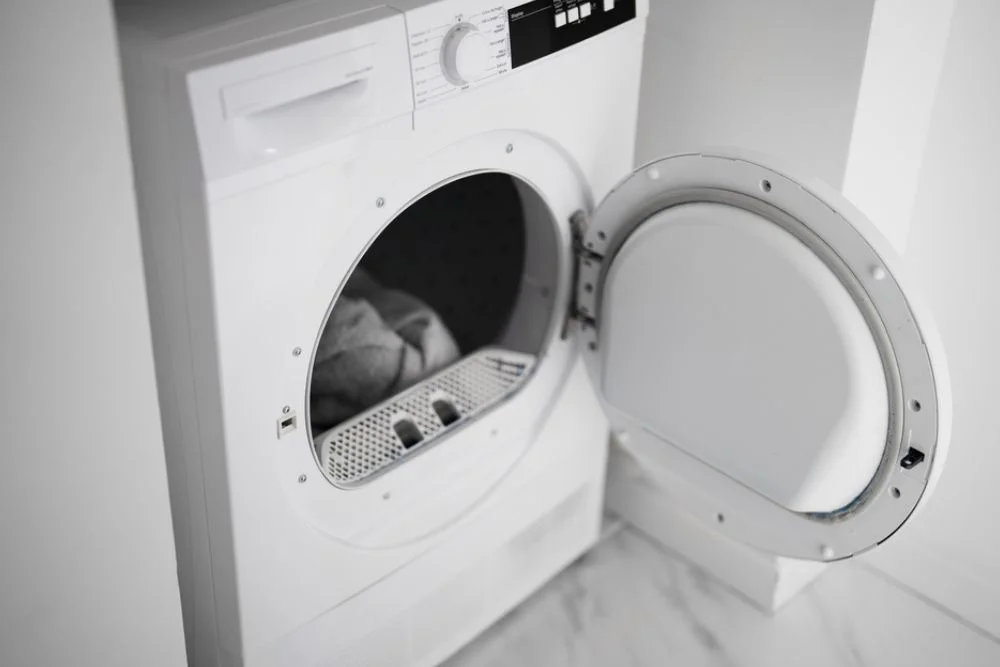
How Do Speed Queen, Whirlpool, Maytag, and Miele Compare for Commercial Use?
Brand selection matters because not all machines are engineered for the same intensity of use. Speed Queen has built its reputation specifically on commercial durability, with machines rated for significantly higher cycle counts than standard residential units. Whirlpool and Maytag offer strong mid-range options that balance performance with accessibility, making them popular choices for mid-size apartment communities and institutional settings.
Miele brings premium German engineering to the table, with machines particularly well-suited for healthcare facilities and high-end residential properties where precision and hygiene standards are elevated.
When comparing brands, it helps to look beyond price and focus on total cost of ownership. That includes energy ratings, warranty coverage, parts availability, and expected service intervals. You can find a detailed breakdown by reviewing key factors for comparing laundry brands before committing to a purchase or lease. A machine that costs less upfront but requires frequent servicing often ends up costing more over a three-to-five-year period.
Each brand also performs differently depending on the use case. Speed Queen excels in high-volume shared facilities that run machines continuously. Miele is frequently specified for healthcare and assisted living environments where hygiene compliance is non-negotiable.
Whirlpool and Maytag tend to be strong performers in mid-volume settings like smaller apartment buildings, motels, or RV parks. The right choice depends on your load volume, your maintenance budget, and the expectations of your residents or guests.
What Are the Differences Between Coin, Card, and App-Operated Commercial Laundry Equipment?
Payment system selection affects how easily you can manage revenue, how your residents interact with the machines, and how often you need to physically service payment hardware. Coin-operated systems have been the standard for decades and are still a reliable option in certain settings. However, they require regular coin collection, increase the risk of vandalism, and offer limited data visibility into machine usage and revenue. Many properties are moving away from coin dependency for these reasons.
Card-based systems use smart cards or property-specific laundry cards that residents load with credit. These systems reduce the need for cash handling and give property managers cleaner revenue tracking. App-based payment platforms take that a step further, allowing residents to pay directly from their smartphones, check machine availability remotely, and receive notifications when cycles finish.
You can explore the full comparison of these approaches by reading about coin versus card laundry payment systems in detail.
The following are the most common payment formats available for shared laundry facilities today:
- Coin-operated systems with traditional coin drop mechanisms
- Smart card systems loaded at on-site kiosks or online portals
- Mobile app payment platforms with real-time machine monitoring
- Hybrid systems that accept both card and app payment methods
Each format has different upfront costs and ongoing management demands, so choosing the right one means weighing resident demographics, property size, and your team’s bandwidth for administration. Newer properties and recently renovated buildings tend to benefit most from fully cashless systems, while older buildings may find a hybrid approach a practical bridge during transition.
Want to get started?
Call Commercial Laundries at 305-889-7966 and ask about commercial laundry machines for lease
We’re here to help you find the proper equipment right now.
What Our Customers Are Saying
Should Multi-Housing Properties Buy or Lease Commercial Laundry Equipment?
The buy-versus-lease decision comes down to capital availability, operational preferences, and how much risk your organization wants to carry. Purchasing equipment outright gives you full ownership and eliminates monthly payments, but it also means you are responsible for all maintenance, repairs, and eventual replacement costs.
For properties with tight maintenance teams or limited capital reserves, that responsibility can become a significant burden. Leasing transfers much of that operational risk to the provider while keeping your upfront costs low.
Leasing arrangements typically include maintenance plans, which means repairs and parts replacement are handled without additional charges. That predictability is valuable for property managers who need consistent operating budgets. It also means machines are more likely to be serviced promptly, which reduces downtime and keeps residents satisfied. You can get a thorough overview of what to expect by reviewing what to know about equipment leasing programs before making a commitment.
Consider the following when deciding which model fits your property best:
- Budget flexibility and appetite for large capital expenditures
- In-house maintenance capacity and technical expertise
- Expected machine lifespan relative to property renovation timelines
- Desire for predictable monthly costs versus long-term ownership equity
Many multi-housing operators find that leasing is the smarter long-term play, particularly when the lease includes full-service maintenance coverage. Think of it the way a facility manager might think about a fleet vehicle lease: the goal is reliable performance, not asset accumulation. Owning may make sense for larger portfolios with dedicated maintenance infrastructure, while leasing serves most mid-size operators better.
Frequently Asked Questions About Shared Laundry Facilities for Multi-Housing Properties
These are the questions property managers and facilities directors most commonly raise when evaluating laundry room upgrades or new installations:
-
How many washers and dryers does an apartment building typically need?
Industry guidance generally recommends one washer-dryer pair for every eight to ten units in a shared laundry facility. The exact number depends on building occupancy rates, unit sizes, and whether in-unit hookups are also available.
-
How long do shared laundry machines typically last in a multi-housing setting?
Machines used in shared facilities typically last seven to ten years with proper maintenance, though high-volume properties may see shorter cycles. Regular servicing significantly extends operational life and reduces the frequency of unexpected breakdowns.
-
What is the difference between a lease with maintenance and a standard equipment lease?
A lease with maintenance includes scheduled service, parts, and repairs as part of the monthly agreement, while a standard lease only covers the equipment itself. The maintenance-included model is generally more cost-effective for facilities without dedicated technical staff.
-
Are cashless payment systems reliable in older apartment buildings?
Yes, most modern card and app-based systems are designed to work with existing electrical infrastructure and do not require major renovations. A qualified provider can assess your building’s setup and recommend the most compatible payment technology.
-
What happens if a leased machine breaks down and disrupts laundry access?
Reputable leasing providers include service response commitments in their agreements, meaning technicians are dispatched quickly to minimize downtime. Clarifying response time expectations before signing a lease protects your residents and your property’s reputation.
-
Can a property mix different brands of washers and dryers in the same laundry room?
Mixing brands is technically possible but can complicate servicing, since different manufacturers use different parts and may require different technician certifications. Sticking with one or two brands from a single provider simplifies maintenance and ensures consistent performance across the room.
Key Takeaways on Commercial Laundry Equipment
- Match machine type and quantity to your property’s user volume and floor space.
- Brand selection should reflect your facility’s intensity of use and hygiene requirements.
- Cashless payment systems reduce administrative burden and improve resident convenience.
- Leasing with maintenance coverage offers predictable costs and reduces operational risk.
- Working with a professional provider ensures proper sizing, installation, and long-term support.
Shared laundry operations have a direct impact on resident satisfaction, operating budgets, and property value. Getting the equipment, payment systems, and ownership model right from the start saves significant time, money, and stress down the road.
To explore your options and get guidance specific to your property’s needs, reach out to Commercial Laundries today. Their team serves properties across Florida from offices in Miami, Fort Myers, and Orlando, and can help you design a laundry solution that fits your building, your budget, and your residents. Call 305-889-7966 to speak with a specialist and take the first step toward a laundry room that runs the way your property deserves.
Resources
- Energystar – Clothes Washers
- Bobvila – What’s the Difference? Top-Load vs. Front-Load Washers
- Speed Queen – Find Washer & Dryer Services Near You
 Coin Drop Installed, Prep for Coin, Prep for Card
 Coin Drop Installed, Prep for Coin, Prep for Card
 Coin Drop Installed, Prep for Coin, Prep for Card